If you’re planning a whole-home refresh, you’ve likely asked: What’s the true cost to paint the interior of a house—especially a 2,000 sq. ft. home? Prices vary by location, wall condition, paint system, ceilings/trim, and the scope of prep work. Your final quote will reflect not just square footage, but also labor hours, number of coats, primer needs, and access (stairwells, tall walls, vaulted ceilings)—all of which can change the bottom line.
In this guide, you’ll find a clean breakdown of costs, the 8–10 factors that move the estimate, room-by-room pricing, and smart planning advice—so you can budget realistically and choose the right approach for your home. When you’re ready, Rodriguez Painting Georgia can provide a precise line-item estimate for your address and timeline.
See our comprehensive pillar guide, How Much Does It Cost to Paint the Interior of a House, for broader pricing logic, full tables, and planning checklists.
Understanding the Importance of Interior Painting for the Home Interior
Interior painting isn’t just aesthetic; it’s also protective, hygienic, and value-building. A well-executed project:
-
Brightens and updates dated spaces.
-
Seals and protects drywall and trim from wear, moisture, and stains.
-
Improves indoor air quality when you choose low-VOC/zero-VOC products.
-
Supports resale value with clean, neutral tones and consistent finishes.
Because paint is both a finish and a barrier, proper surface prep (patching nail pops, sanding, caulking gaps, priming stains, deglossing shiny areas) is critical to long-term durability.
Average Cost to Paint 2,000 Sq. Ft. House Interior
Across major U.S. cost guides, interior painting commonly ranges ~$2–$6 per sq. ft. for walls, with ceilings, trim, and doors priced separately. Translating that to a 2,000 sq. ft. home, you’ll typically see ~$4,000–$12,000 for a full interior depending on prep, finish level, and complexity.
Some providers show tighter ranges when all scope elements (ceilings, trim, doors, two coats, primer) are included, while others quote walls-only then add line items. This is why scope clarity matters: two bids can look very different if one excludes ceilings/trim or assumes minimal prep.
Additional benchmarks you’ll see in trusted sources:
-
$2–$6 per sq. ft. as a national baseline for interiors.
-
2,000 sq. ft. full interior often falls ~$9,000–$15,000 when more complete scopes are considered (ceilings/trim, repairs).
-
Typical whole-home ranges vary widely based on region and scope; consumer guides consistently echo the per-sq-ft logic.
Below are realistic, rounded averages homeowners often see in U.S. markets. Use them as a budget starting point; your final quote will reflect your home’s specific scope and wall condition.
|
Area / Room Type |
Average Cost Range |
Cost per Sq. Ft. |
Notes |
|---|---|---|---|
|
Bedroom (10×12) |
$300 – $700 |
$2.50 – $4.00 |
Includes ceiling & trim if specified |
|
Living Room |
$600 – $1,200 |
$2.50 – $4.50 |
Tall walls / vaults increase labor |
|
Kitchen |
$400 – $800 |
$3.00 – $5.00 |
Degreasing & stain-blocking often needed |
|
Bathroom |
$200 – $500 |
$2.00 – $3.50 |
Moisture-resistant paints recommended |
|
Whole Home (1,500 sq. ft.) |
$2,500 – $4,000 |
$2.50 – $3.50 |
Walls only; add ceilings/trim |
|
Whole Home (2,000 sq. ft.) |
$4,000 – $12,000 |
$2.00 – $6.00 |
Range reflects scope & prep level |
According to HomeAdvisor, interior painting averages about $2–$6 per sq. ft., with national interior costs around $2,022 on average.
Factors That Influence Interior Painting Costs
Before you lock in a number, it helps to know what actually drives the cost of an interior repaint. The items below explain why quotes for the same home can differ—and where the biggest savings (or overages) usually come from.
Paint Quality and Type Selection
Your paint choice isn’t just about color—it’s about coverage, durability, VOC level, and sheen (matte, eggshell, satin, semi-gloss).
-
Budget lines often run $20–$30/gal but may need more coats.
-
Premium/low-VOC systems commonly run $50–$70+/gal yet offer better washability and longer life.
-
A typical 2,000 sq. ft. whole-home project (walls) uses roughly 10–15 gallons depending on layout, color change, and two-coat coverage.
Choosing a higher-performance system can reduce repaints and improve the final finish on high-touch areas.
Square Footage & Layout
Square footage sets the baseline for paint and labor, while layout determines efficiency. Open plans, long hallways, and many rooms increase masking, cutting-in, and setup cycles. Tall walls, stairwells, and vaulted ceilings add ladder or scaffold time. Complex transitions and niches slow production, raising the overall interior painting cost significantly.
Wall Condition & Repairs
Wall condition directly affects cost and finish quality. Nail pops, cracks, dents, peeling paint, stains, and glossy surfaces require patching, sanding, caulking, deglossing, and stain-blocking primer. Heavier repairs add labor time and materials, and may necessitate extra coats, ensuring proper adhesion, uniform sheen, and long-lasting, professional results for durable performance.
Scope: Walls vs. Ceilings/Trim/Doors
Scope drives price. Walls-only quotes appear lower because ceilings, trim, and doors add materials, masking, cutting-in, and extra coats. Ceilings often need stain-blocking; trim and doors use tougher, higher-sheen enamels and meticulous sanding between coats. Clarify inclusions—surfaces, coats, primer, and repairs—to compare bids fairly and avoid change orders and surprises.
Access & Protection
Access & Protection covers safe entry and surface safeguarding: moving furniture, masking floors, covering fixtures, and setting ladders or scaffolds for tall walls and stairwells. Proper containment prevents dust, drips, and overspray, speeds production, and reduces damage risk—protecting your home while giving painters clear, efficient workspace, from setup to cleanup.
Regional Pricing Differences
Interior painting prices vary by region due to labor rates, cost of living, material availability, climate, and seasonality. Urban areas and coastal markets trend higher; rural zones often cost less. Humidity, dry time, and specialty primers also influence bids. Local codes, HOA rules, and travel time add variability and overhead.
Labor Costs and Professional vs. DIY
Labor is usually the largest line item. Many markets price labor/supplies around $2–$6 per sq. ft. depending on location, demand, and scope.
-
Professional crews bring surface-prep standards (patching, sanding, caulking, priming), consistent cut lines, and efficient timelines—often finishing a 2,000 sq. ft. home in 3–5 days.
-
DIY can look cheaper but typically stretches to 1–2 weeks, and missteps (lap marks, flashing, adhesion issues) may negate savings.
Room Complexity and Preparation Requirements
Your home’s interior features significantly impact costs:
-
High ceilings requiring special equipment
-
Detailed trim work and crown molding
-
Wall repairs and surface preparation
-
Number of rooms and layout complexity
-
Color changes requiring multiple coats
These architectural elements and preparation needs can increase both labor time and material requirements, affecting your overall budget.
Breaking Down the Costs
Painting a 2,000-square-foot home is a mix of materials, labor, and situational add-ons. Looking at each component separately helps you compare quotes fairly and set a realistic budget. Materials cover the paint system and supplies; labor covers preparation, application, and finishing; and there are a few “sometimes” costs that depend on your home’s condition and choices (like color changes or specialty finishes).
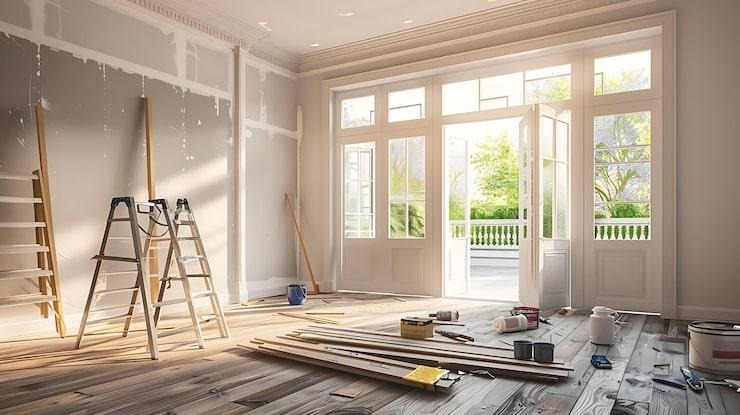
Material Costs (Paint, Supplies, Equipment)
For a 2,000-square-foot interior, materials typically include paint, primer, basic tools, protection, and small repair items. Expect $400–$1,050 for paint (about 10–15 gallons, depending on coverage and number of coats) and $100–$300 for primer if a color change or stain-blocking is needed. Basic supplies such as brushes, rollers, and tape usually fall around $100–$200, while drop cloths and protective coverings add $50–$100.
Small consumables—caulk, patching compounds, and spackle—often add $50–$150. Put together, total material costs commonly range from $700–$1,800, with quality level and brand selection being the biggest swing factors.
Professional Labor Cost Breakdown
Labor is where most of the budget lives because it includes skilled prep and careful application. Surface preparation—patching, sanding, caulking, priming—often ranges $500–$1,000. Basic wall painting commonly lands between $2,000–$4,000, with trim and detail work adding another $500–$1,500 depending on profiles and quantity.
If ceilings are included, plan for $800–$1,600, and a final round of cleanup and touch-ups typically adds $200–$400. In most full-home projects, labor represents about 70–85% of the total because quality prep and clean lines take time.
Hidden Costs to Consider
A few items can nudge the price up and are easy to overlook. Moving and protecting furniture can add $200–$400 if you need professional help. Wall repairs beyond light patching—like fixing stress cracks, nail pops, or minor texture blending—may range $200–$1,000 depending on condition.
Deep color changes, extra coats for proper hide, specialty finishes, and enhanced floor or fixture protection can also increase totals. None of these are guaranteed line items, but they are common in real-world scopes.
Cost Ranges for Different Scenarios
Basic paint job (builder-grade) — $3,000–$5,000 total:
This tier prioritizes affordability with basic-grade products and straightforward, single-color walls. Prep is minimal and trim is kept simple. It’s a good fit for rental turnovers or quick updates where a 2–3 year durability window is acceptable.
Mid-range paint job — $5,000–$8,000 total:
A step up in quality and finish, this tier typically uses reputable mid-grade brands, includes minor wall repairs, two-coat coverage for consistent color, and more attention to trim details. Multiple color selections are common. Homeowners usually see 5–7 years of solid performance.
Premium paint job — $8,000–$12,000 total:
At this level, the scope is more comprehensive: top-tier paints, extensive prep and repairs, ceilings and trim fully included, and the ability to execute complex color schemes or higher-sheen finishes. Projects in this range often specify multiple coats for deep or dramatic colors and aim for 10+ years of durability with proper care.
Money-Saving Tips Without Sacrificing Quality
A bit of planning goes a long way. Scheduling during slower months can unlock better availability and sometimes tighter pricing. Handling small tasks—like moving light furniture or removing switch plates—reduces setup time. If the budget is tight, focus first on high-traffic zones or spaces you use every day. Choosing lighter shades can limit the number of coats needed, and buying quality paint when it’s on sale provides long-term savings because it lasts and cleans better. Finally, get a few detailed, apples-to-apples quotes and consider bundling rooms to improve overall pricing.
Making the Right Choice for Your Home
A full interior repaint for a 2,000-square-foot home typically spans $3,000–$12,000, and the right point within that range depends on your expectations for durability, finish level, and color complexity. Materials generally account for 15–30% of the total, while professional labor is the largest expense because skilled prep and application determine how good the result looks—and how long it lasts. With clear scope definitions, realistic allowances for prep, and a finish plan that fits your lifestyle, you’ll get a project that transforms your home and protects your investment for years.
At Rodriguez Painting Georgia you can hire our professional painters for a quick scope review and timeline, or request a free estimate. Call us at 678-355-6162 and get a free quote today.
Conclusion
A realistic cost to paint the interior of a house—and specifically a 2,000 sq. ft. home—depends on scope, wall condition, coats, and local labor. Reliable ranges often fall between $4,000 and $12,000 for walls with typical prep, and rise as you add ceilings, trim/doors, repairs, and specialty finishes. The smartest path is a clear, line-item estimate aligned to your goals, finish choices, and timeline.
See our comprehensive pillar guide, How Much Does It Cost to Paint the Interior of a House, for broader pricing logic, full tables, and planning checklists.
Ready to refresh your home?
Get a fast, line-item estimate tailored to your address and timeline. Contact us or call at 678-355-6162 today.
FAQs
What’s a realistic budget to paint a 2,000 sq. ft. home interior?
Most homeowners see ~$4,000–$12,000 for walls depending on prep, coats, and scope (ceilings/trim/doors add cost). Benchmarks from major cost guides align with $2–$6 per sq. ft.
Why do two quotes for the same home differ so much?
Scope clarity. One bid may exclude ceilings, trim/doors, primer, or repairs; another includes them. Ask for line-item proposals to compare apples to apples.
How many coats do I need?
Most projects use two topcoats; dark-to-light changes or specialty colors may require tinted primer plus two coats for uniformity.
Which paint finishes work best?
Use matte/eggshell in living areas and bedrooms; satin in hallways/kitchens; semi-gloss on trim/doors for washability.
How much paint will I need?
Retail calculators assume ~350–400 sq. ft./gallon for walls; primer covers less. Complex layouts, accent walls, and repairs affect yield.
Can I save money with DIY?
DIY lowers upfront costs but can extend timelines and risks lap marks, flashing, or adhesion issues. Pro crews bring prep standards and consistent finish quality.
What affects labor the most?
Access (stairwells), tall walls, complex trim, and repairs. Labor/supplies often track in the $2–$5 per sq. ft. band, with region and scope impacting totals.
Are low-VOC paints worth it?
Yes—particularly for indoor air quality and sensitive households. Choose low- or zero-VOC lines from reputable brands.