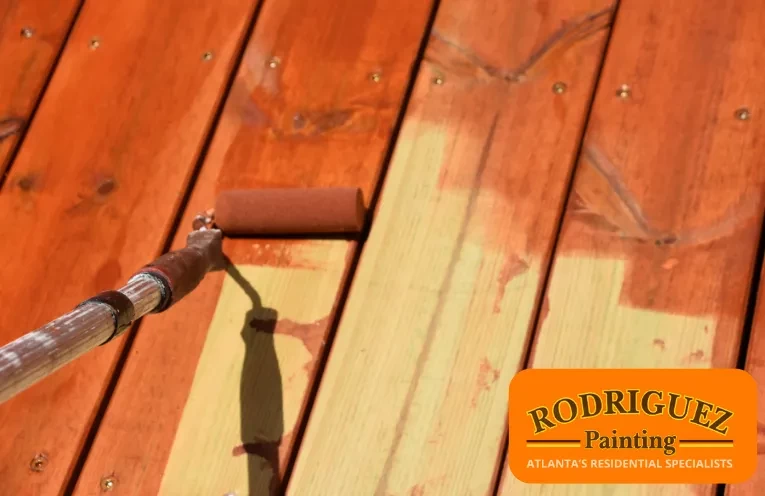
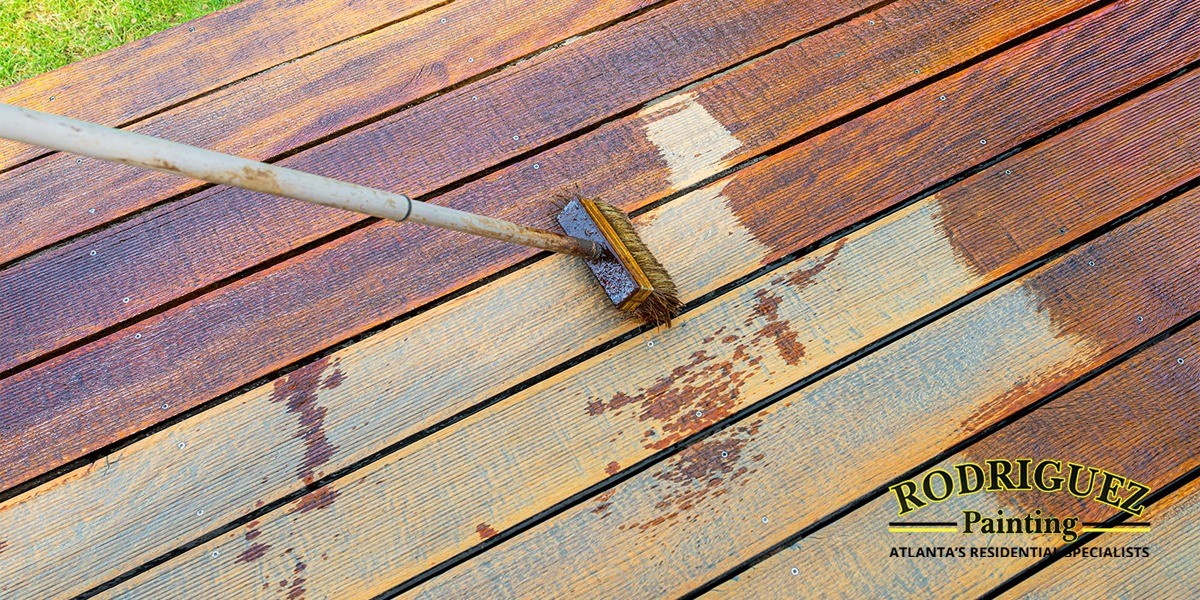
A deck is one of the first things people notice outside a home. In Georgia, that outdoor space also takes constant wear. Sun exposure, humidity, pollen, and foot traffic slowly break down finishes, especially on flat walking surfaces and stair treads.
When the coating fades or peels, the next step is usually a quote. That is when homeowners see a wide spread in pricing. One quote may cover only the deck floor boards with minimal prep. Another may include railings, spindles, stairs, repairs, primer, and a two coat system. Without context, it can feel confusing.
This guide explains deck painting cost in plain language. You will learn typical cost per sq ft ranges, what drives the total, and how to compare estimates. You will also see how the cost to paint deck in Georgia changes with prep depth, product choice, and the amount of detail work.
You will see Rodriguez Painting Georgia referenced where it helps clarify what a professional scope usually includes, but this article keeps branding light. The goal is budget clarity and long lasting results.
Typical deck painting cost ranges
Homewyse provides place deck painting around about 2.00 to 5.00 per sq ft for a standard repaint, with staining often showing a similar band depending on prep and product. Refinishing can trend higher when stripping, heavy sanding, or repairs are required.
Several well known sources align on this general idea. Angi guides commonly cite paint ranges around two to five per sq ft and refinishing ranges that move higher. HomeAdvisor and HomeGuide often present similar planning numbers. Fixr frequently shows staining priced by the square foot and notes that railings and detail work can shift the total.
Cost calculators can narrow the estimate further. For example, Homewyse calculators often show deck painting starting around about 2.33 to 4.52 per sq ft depending on options and conditions. Use these numbers to plan, then refine based on the condition of your deck.
Georgia planning ranges that make sense
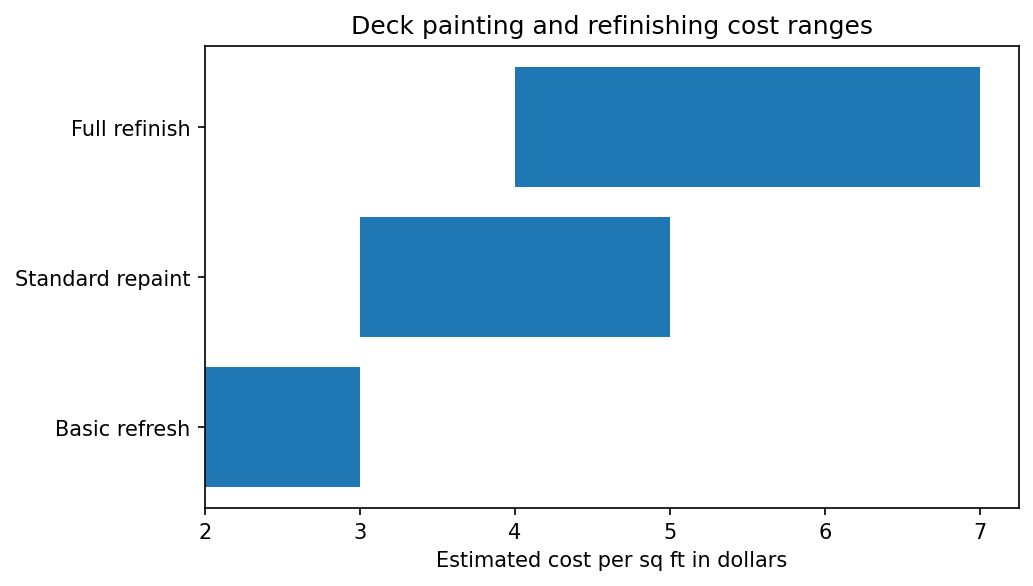
For homeowners comparing quotes in Georgia, the following planning bands are practical and realistic.
Basic refresh. Light cleaning, minor sanding, and one topcoat. About 2.00 to 3.00 per sq ft.
Standard repaint. Cleaning plus sanding plus a two coat system. About 3.00 to 5.00 per sq ft.
Full refinish. Heavy sanding or stripping plus repairs plus premium coating. About 4.00 to 7.00 per sq ft.
A deck with peeling paint or a rough surface usually lands closer to standard repaint or full refinish. A deck that was coated recently and is still sound may fit a basic refresh.
What is included and how it is priced
Quotes differ because deck surfaces are priced differently. Floor boards are priced per sq ft. Railings and spindles are often priced per linear ft or as separate detail items. Stairs are frequently treated as a separate unit because they require careful cut in and traction planning.
|
Area or component |
Typical cost range |
Typical pricing unit |
Notes |
|
Deck floor boards |
$2.00 to $5.00 per sq ft |
Per sq ft |
Higher when scraping, sanding, or stripping is required. |
|
Railings and spindles |
$4.00 to $12.00 per linear ft |
Per linear ft |
Detail work increases labor time and brush control. |
|
Stairs and risers |
$150 to $600 per set |
Per set |
Often includes traction options and extra masking. |
|
Posts and beams exposed |
$75 to $250 per area |
Per area |
Edges, fasteners, and cut in work add time. |
|
Repairs before coating |
$100 to $1000 plus |
Per repair scope |
Rot replacement and board swaps can shift totals. |
Deck size examples: what a real budget looks like
Homeowners often want quick math. Per sq ft pricing helps you forecast a total before you collect quotes. The table below uses common planning bands to show typical totals for the deck floor area.
|
Deck size |
Basic refresh total |
Standard repaint total |
Full refinish total |
|
200 sq ft |
$400 to $600 |
$600 to $1000 |
$800 to $1400 |
|
300 sq ft |
$600 to $900 |
$900 to $1500 |
$1200 to $2100 |
|
400 sq ft |
$800 to $1200 |
$1200 to $2000 |
$1600 to $2800 |
|
500 sq ft |
$1000 to $1500 |
$1500 to $2500 |
$2000 to $3500 |
If your deck has extensive railings, built in seating, lattice, or multiple stair runs, your total can rise because the project becomes detail heavy.
What affects deck painting cost the most
Surface condition
A deck that only needs a maintenance coat is very different from a deck with peeling paint. Peeling usually means extra scraping and sanding, and sometimes product removal before a new coating can bond.
Prep depth
Prep is the biggest quality driver. Pressure washing, drying time, sanding, and spot priming improve adhesion. If a quote is low, confirm prep steps. Pressure washing alone is rarely enough when paint is failing.
Moisture and mildew
Georgia humidity and shade can create mildew growth. Mildew treatment and moisture control help coatings cure and last longer, especially on shaded surfaces.
Product selection
Acrylic deck paint, solid color stain, and high build coatings have different costs and performance. Premium products may cost more per gallon but can reduce early failure.
Detail work
Railings and spindles take time. They have edges and narrow faces. A deck with extensive railings can cost more than a deck with the same square footage but minimal railings.
Repairs
If boards are soft, cupped, or split, coating will not solve the underlying issue. Repair costs add to the project but protect the finish from failing on unstable wood.
Access and protection
Tight access can raise labor time. Landscaping and nearby siding protection can add masking time and careful cleanup steps.
Scheduling and labor
Labor rates vary by county and season. Peak outdoor months can tighten schedules, especially for crews that focus on exterior work.
How professionals estimate paint quantity
Material planning is part of a reliable estimate. Most deck coatings are sold by the gallon, and coverage depends on the product and the surface texture.
A smooth surface can cover more area per gallon. A rough, weathered surface absorbs more and can cut coverage noticeably. Railings and spindles also reduce coverage efficiency because of edges and brush application.
Many contractors plan for two coats on walking surfaces for durability. They may also plan extra product for stairs, edges, and end grain. End grain absorbs coating quickly and often needs more attention.
If you want to compare value, ask whether the estimate assumes one coat or two coats and whether primer is included where needed.
A clear scope checklist for estimates
A strong estimate usually includes a clear list of steps. If a quote does not mention these items, ask whether they are included:
-
Cleaning method and mildew treatment plan for shaded surfaces
-
Dry time plan and how moisture content is checked before coating
-
Sanding plan and how peeling areas are handled
-
Repair allowance and how replacement boards are priced
-
Primer usage and product line selection for your deck condition
-
Number of coats for floor boards, stairs, and railings
-
Protection plan for siding, doors, landscaping, and nearby windows
-
Cleanup plan and final walk through expectations
Paint vs stain: which is better for Georgia decks
Paint is often chosen when homeowners want a solid color look or when the deck was previously painted. It can hide discoloration and provide a uniform finish. The key risk is peeling if prep is weak or if moisture escapes from the wood.
Stain is often chosen for a more natural look. Semi transparent stain highlights grain, while solid stain provides more color coverage. Solid stain can be a practical middle ground when you want a consistent color but prefer a coating that wears more gradually.
If your deck is already painted and peeling, switching to a different finish system can require deeper prep. If your deck is bare wood or previously stained, a stain system can be efficient when matched to exposure and maintenance.
Professional deck painting typically recommends the approach that matches your deck history and condition, because the best system is the one that bonds well and fits your maintenance expectations.
Georgia specific considerations
Georgia weather affects both application and durability. High humidity slows curing. Shade lines increase mildew risk. Strong sun fades darker colors faster. Pollen and dust can land on tacky coatings if timing is off.
For the cost to paint deck in Georgia, this means prep and scheduling matter. A proper scope may include mildew treatment, careful dry time planning, and a product chosen for moisture resistance and UV exposure.
If your deck is near trees or stays shaded, ask whether the coating selected includes mildew resistance. If your deck is fully exposed, ask about UV durability and color fade expectations.
Maximizing your painting investment
A deck coating lasts longer when the base is stable. Prep is not an optional add on. It is the core of durability.
Quality preparation can extend service life significantly. Cleaning, sanding, and spot priming improve adhesion and reduce early peeling.
Choose appropriate paint grades. Match product durability to exposure and use. High traffic decks benefit from scuff resistant finishes.
Plan for light maintenance. Touch ups every few years can prevent water from entering weak spots and reduce the need for a full repaint.
Georgia humidity often calls for mildew resistant formulations and careful cure time between coats.
When to schedule your project in Georgia
Deck work depends on outdoor conditions. Temperature, humidity, and rain risk can influence curing.
Spring and fall often provide stable conditions for exterior deck coating in Georgia. Mid summer heat can affect application and can cause coatings to flash dry before leveling.
If you want better availability, consider booking early or selecting a fall window when schedules may open up.
DIY vs professional deck painting
DIY can reduce the cash cost, but it often increases risk. Common problems include coating applied before the deck is fully dry, missed sanding, uneven cut in on railings, and lap marks on wide boards.
Professional work is not just faster. A good crew delivers consistent prep, correct product selection, and a predictable finish. Professionals can also handle repairs that protect the coating from failing early.
If you compare fairly, consider time, tool costs, material waste, and the cost of a redo. A cheaper DIY job is not a bargain if it fails quickly and needs to be redone.
Where the pricing ranges come from
The ranges in this article are built by comparing patterns across multiple homeowner pricing guides and calculators. These sources use contractor survey data, typical labor assumptions, and material estimates.
Examples of commonly referenced sources include Angi cost guides, HomeAdvisor cost guides, Fixr cost breakdowns, Homewyse cost calculators, HomeGuide pricing summaries, and Bob Vila cost explanations that often cite aggregated market ranges.
When you compare these sources, a consistent pattern appears. Standard deck painting often clusters around about 2.00 to 5.00 per sq ft. Staining often clusters around similar bands depending on prep. Full refinishing often trends higher when heavy sanding, stripping, or repairs are required.
Use these as planning ranges, then confirm your exact scope. Your deck condition and the amount of detail work are the biggest reasons your final number will land toward the low end or the high end.
Sample quote breakdown you can expect
A good estimate usually shows how labor and materials are allocated. This helps you understand why two quotes can look far apart.
Example for a 300 sq ft deck with moderate wear and standard repaint scope.
Cleaning and mildew treatment. This step removes pollen, dirt, and organic growth that can block adhesion.
Dry time and moisture check. Georgia humidity can slow drying, so scheduling and patience protect the finish.
Sanding and edge work. This is where many hours go, especially near boards that cup and around nail heads.
Spot priming where needed. Primer supports adhesion on bare wood, repaired spots, and scraped zones.
Two coat system on floor boards. Two coats help protect high traffic areas that scuff easily.
Detail work on railings and spindles if included. This is often the slowest part of the job because of cut in points.
Final walk through and cleanup. A professional crew should leave the area clean and safe to use.
Color, sheen, and slip resistance choices
Color impacts both appearance and long term wear. Darker colors can show fading faster on full sun decks, while very light colors can show dirt and pollen more quickly in spring.
Sheen level matters for traction. Many homeowners prefer a low sheen or satin look on deck floors to reduce glare and improve grip.
If stairs get slick during rain, ask about a traction additive. It can add safety without changing the color dramatically.
If you have pets, consider scuff resistance and easy cleaning. Some coatings handle claw marks better than others.
Maintenance plan to protect your investment
Deck coatings last longer when water and dirt are managed. Small maintenance steps can delay a full repaint.
Sweep debris regularly. Leaves hold moisture and can stain coatings, especially in shaded corners.
Rinse pollen buildup during peak season. Pollen can create a film that holds moisture and dirt.
Inspect high traffic paths. Board edges and stair treads often show wear first.
Do small touch ups when you see bare wood. Early touch ups prevent water intrusion and reduce peeling.
Avoid harsh pressure washing on a new coating. High pressure can damage the film if used too aggressively.
At Rodriguez Painting Georgia you can hire our professional painters for a quick scope review and timeline, or request a free estimate. Call us at 678-355-6162 and get a free quote today.
Conclusion
Deck painting cost becomes clear when you break it into scope, prep, and product system. In Georgia, humidity and sun make cure time and mildew resistance important, so the best value is rarely the lowest quote on paper. Use per sq ft planning ranges, then compare estimates by what is included, how the surface will be prepared, and whether railings, stairs, and repairs are part of the project.
If you want a straightforward assessment and a clear scope, Rodriguez Painting Georgia can help you budget with confidence and choose a finish system built for Georgia conditions.
Contact Rodriguez Painting Georgia today or call at 678-355-6162 to request a deck painting quote in Georgia.
FAQs
What is the average deck painting cost per sq ft?
Most homeowner pricing guides place standard deck painting around about 2.00 to 5.00 per sq ft, with higher totals when the job becomes a full refinish with heavy sanding, stripping, or repairs.
What is the cost to paint deck in Georgia for a 300 sq ft deck?
Using common planning bands, a 300 sq ft deck often lands around $600 to $900 for a basic refresh, $900 to $1500 for a standard repaint, and $1200 to $2100 for a full refinish before railings, stairs, or repairs.
Why do railings raise the total so much?
Railings and spindles have many edges and narrow surfaces. They require more brush work and cut in time, which increases labor.
Is staining cheaper than painting?
Staining can be similar in cost to painting. The price depends more on prep, repairs, and product selection than on the label paint or stain.
How long does a deck coating last in Georgia?
Lifespan depends on sun exposure, prep quality, and the product system. Many homeowners plan for maintenance touch ups every few years and a more complete recoating when wear becomes visible.
What is the best way to keep costs under control?
Start with a clear scope. Confirm what surfaces are included, confirm prep steps, and confirm coats and product line so you compare value accurately.
Can I paint a damp deck after rain?
It is not recommended. Coating over damp wood can trap moisture and reduce adhesion. Waiting for dry conditions improves durability.
Do I need primer for deck painting?
Primer is often used on bare wood, repaired spots, or areas where old coatings were removed. It improves adhesion and supports a more uniform finish.