Outdoor decks are exposed surfaces. They face sun, rain, pollen, foot traffic, and outdoor furniture scuffs. Over time, boards fade, previous coatings wear thin, and splinters form on high use paths. That is why the deck painting cost question shows up so often for Georgia homeowners.
At the same time, deck painting is not priced like a simple wall repaint. Floors, steps, and railings require slower application and heavier preparation. A deck also needs cure time. Humidity and shade can extend drying windows, which impacts scheduling and labor planning.
This article breaks down deck painting cost per hour and total estimates so you can budget with confidence. You will also learn what changes pricing the most, what should be included in a quote, and which choices protect your investment long term.
To go into the deck paint pricing and options, refer article to Deck Painting Cost per Sq Ft: How Much Should You Pay?, exploring what is the average cost to paint the deck of a house.
How Deck Painting Pricing Really Works
Most professional painters do not price decks by guessing. They estimate labor hours, add material quantities, then add a buffer for complexity and access. The result is a flat project quote that protects you from surprises and protects the contractor from underbidding.
However, many homeowners still want an hourly benchmark because it helps them judge whether a bid is reasonable. That is where deck painting cost per hour becomes useful. It is a reference point, not the final number.
In most markets, deck painting is priced in two common ways. A per square foot rate for floor boards and steps, plus an added allowance for railings and spindles. Or a day rate based on crew size. Both methods still come back to labor time, because prep is labor heavy.
A deck that looks small can still take a long time if it has tight railings, lattice panels, multiple stair sections, or an older coating that is peeling. Those features add hand work, and hand work is what increases costs.
Deck Painting Cost Per Hour in Plain Terms
Hourly rates vary by region, experience, and whether the crew is licensed and insured. Deck work also requires exterior rated products and careful protection of surrounding landscaping and siding.
National cost resources commonly show that painting a deck often lands in a two to five dollars per square foot range. When those totals are divided by typical job hours, the implied deck painting cost per hour often falls in a broad band of about thirty five to ninety dollars per hour depending on the crew and the prep scope.
Angi, a trusted homeowner resource that explains typical cost ranges and factors affecting deck painting pricing by square foot and project size.
Some painters quote a clearer hourly figure for smaller tasks such as single staircase repainting or touch ups. In those cases, you may see hourly pricing in the sixty to eighty five dollar range, especially when the work includes sanding, caulking, and detail brush work.
The best way to apply hourly thinking is to estimate labor hours by scope. Light prep with one level deck and few rails may take eight to twelve labor hours. Medium prep with sanding and full railings often lands around twelve to twenty labor hours. Heavy prep with scraping, repairs, and multiple levels can reach twenty to thirty labor hours or more.
If one quote assumes light prep and another assumes heavy prep, the hourly comparison will feel confusing. That is why the written scope matters more than the hourly number.
Typical Total Estimates for Common Deck Sizes
Use the ranges below as planning numbers. They reflect common consumer cost benchmarks and contractor pricing patterns. Your real number depends on prep, railings, and coating choice.
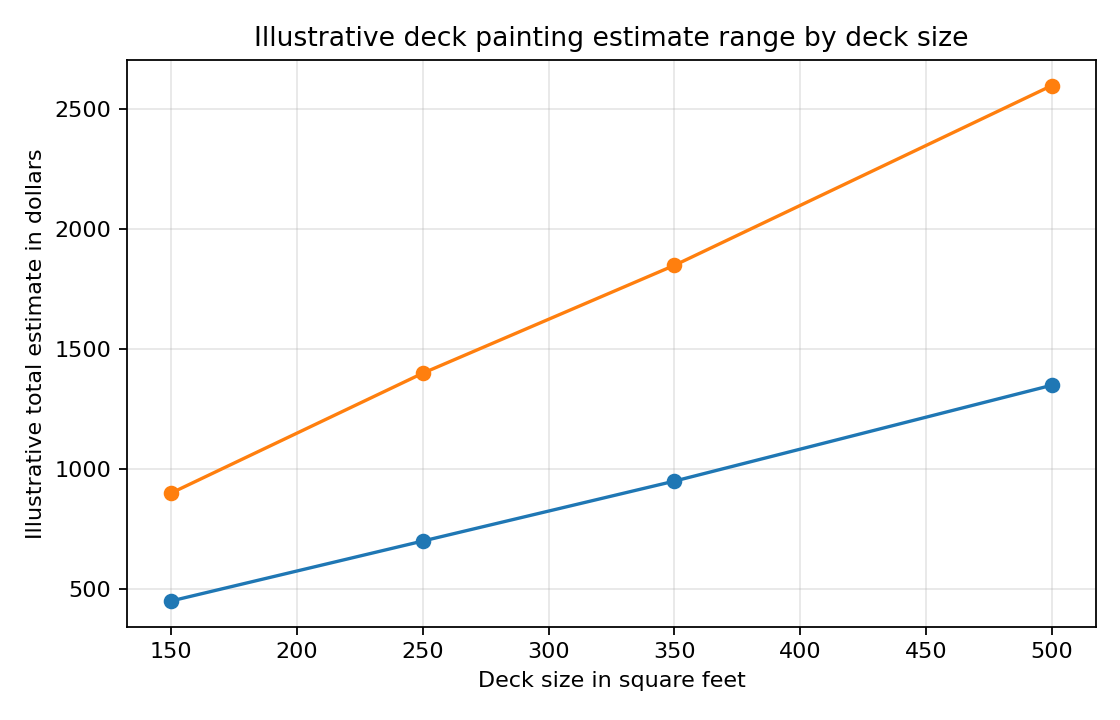
A small deck around one hundred to one hundred fifty square feet often ranges from about four hundred fifty to nine hundred dollars when the surface is in fair shape and the scope includes floor boards plus simple step edges.
A mid size deck around two hundred to three hundred square feet often ranges from about seven hundred to one thousand five hundred dollars when prep is moderate and railings are not overly complex.
A deck around three hundred to four hundred square feet often ranges from about nine hundred to one thousand nine hundred dollars depending on sanding and railing density.
A larger deck around five hundred square feet or more can range from about one thousand three hundred to two thousand six hundred dollars or more, especially when railings, lattice, and multi level sections are included.
If the deck needs stripping, major repairs, or board replacement, total cost can move higher. In those cases, a site visit is essential because the condition determines the labor plan.
Pricing for Fast Budget Planning
|
Deck Size and Scope |
Typical Total Range |
Typical Hour Range |
Notes |
|
Small deck 100 to 150 square feet basic rails |
$450 to $900 |
$35 to $85 |
Light sanding and two coats on floor boards |
|
Medium deck 200 to 300 square feet full rails |
$700 to $1,500 |
$40 to $90 |
Railing detail work increases labor hours |
|
Large deck 350 to 500 square feet multi level |
$950 to $2,600 |
$45 to $95 |
More masking and longer cure planning |
|
Staircase only repaint and touch ups |
$150 to $450 |
$60 to $85 |
Often priced as a minimum service call |
.png)
Key Cost Drivers That Change Your Quote
• Current coating condition. Peeling paint or thick stain layers increase scraping and sanding time.
• Railing density. Spindles take longer than open panels because each edge must be cut cleanly.
• Deck layout. Multi level decks require more setup and more ladder safe movement.
• Access and masking. Tight landscaping and nearby siding require additional protection.
• Paint color change. Going from dark to light often needs extra coats or primer.
• Moisture exposure. Shaded decks with mildew need deeper cleaning and longer drying.
• Safety needs. Steep stairs and high railings can require slower work and careful staging.
Prep Work Costs Cleaning Sanding Repairs
Preparation is the largest hidden cost in deck refinishing. It is also the part that determines whether the finish lasts.
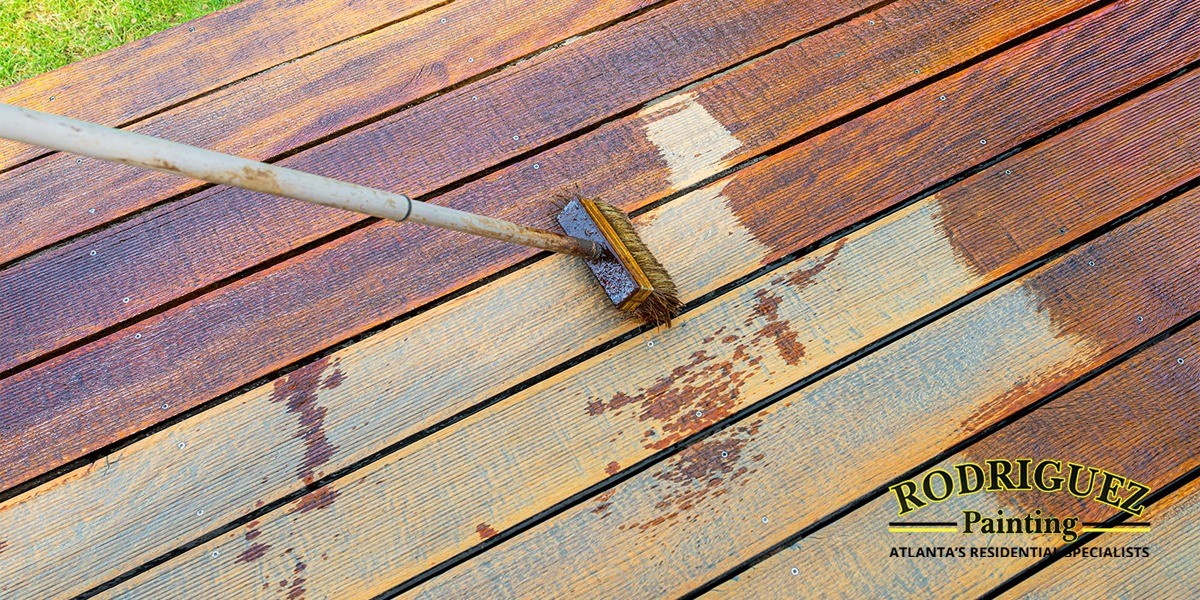
Cleaning removes pollen, algae, grease, and loose fibers. In Georgia, pollen seasons can leave a film that reduces adhesion if it is not removed. Mildew treatment is also important for shaded decks.
Drying is not optional. Wood must dry after washing. If the deck is coated while damp, the finish can bubble, peel, or trap moisture.
Sanding smooths raised grain and removes loose coating edges. It also helps create a consistent surface profile so the new coating bonds evenly.
Repairs can include replacing soft boards, resetting nails or screws, fixing splinters on stair noses, and correcting cracked end grain. Even minor repairs add value because they reduce early failure points.
Masking and protection should be visible in the scope. A careful contractor protects adjacent siding, nearby concrete, and landscaping, especially when using sprayers.
Material Choices Paint Stain Primer Sealer
Your material choice affects both appearance and long term maintenance. The most common options include deck paint, solid stain, semi transparent stain, and clear sealers.
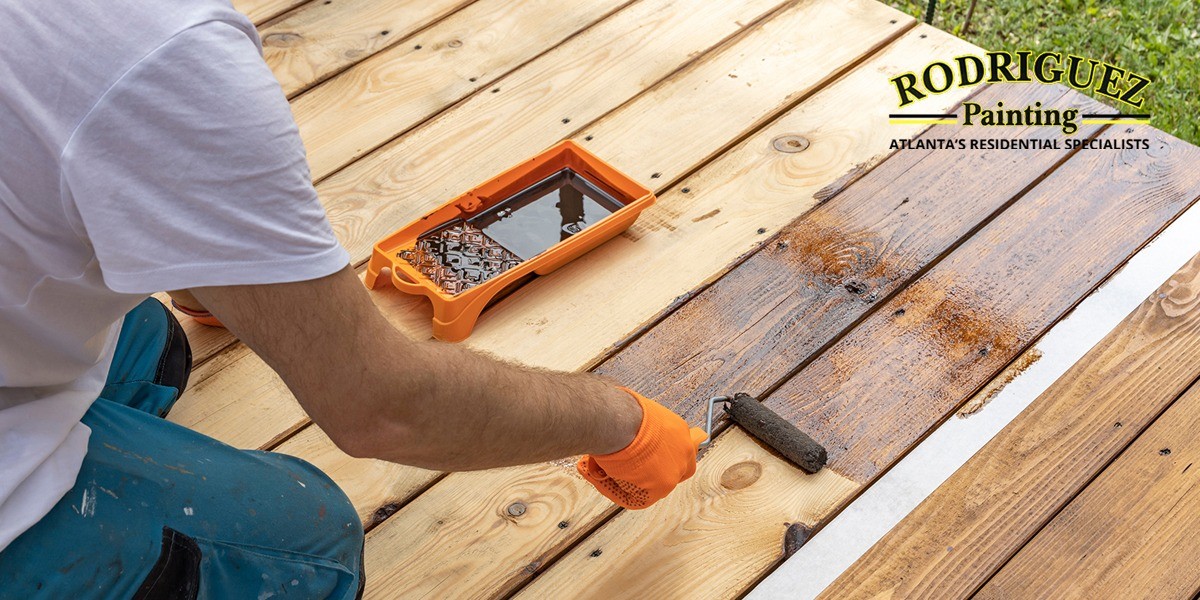
Deck paint creates an opaque finish. It is often selected when boards are uneven in color or when a homeowner wants a clean uniform look. Paint demands strong prep because adhesion must be consistent across floor boards and steps.
Solid stain delivers strong color with subtle texture. It can be a good middle path for homeowners who want coverage but still want a coating that is more breathable than paint.
Semi transparent stain highlights wood grain. It is usually chosen for newer boards or for homeowners who want a natural look. It will not hide surface flaws, so prep still matters.
Primer may be needed when bare wood is exposed, when there is a major color change, or when tannin staining is likely. A primer step adds time and material cost, but it can prevent bleed through and improve coverage.
Sealers are often used after staining to improve water repellency. A contractor should select products designed for horizontal walking surfaces to support slip resistance and UV protection.
Georgia Factors Humidity Sun Pollen and Season
Georgia weather is a real cost factor. Humidity can slow cure time and extend project timelines. Shade and tree coverage can keep boards damp longer after washing, especially on north facing decks.
Sun exposure creates UV wear. High exposure decks may need more frequent maintenance cycles, even when the initial paint job is done correctly.
Pollen and organic debris are common. If a deck is coated without proper cleaning, the finish may not bond evenly. That is why professional scopes often include washing and mildew treatment.
Season also impacts scheduling. Spring and early summer are popular windows for exterior projects. When demand rises, calendars tighten. Late fall and winter can offer more scheduling flexibility as long as temperatures allow product curing.
How to Compare Quotes Without Guesswork
Comparing deck quotes is easiest when you compare scope first, then compare price.
Start by checking surfaces. Does the quote include floor boards, steps, railings, spindles, lattice, fascia, and underside edges where visible. If one bid excludes railings, it may look lower while delivering less.
Next, compare prep steps. Look for washing method, mildew treatment, drying time plan, sanding level, scraping detail, and repair allowances.
Then compare products. The estimate should specify paint or stain type, primer usage, and number of coats. If products are not listed, you cannot evaluate quality or durability expectations.
Finally, compare timeline and cure planning. A realistic schedule protects the finish. Rushing coats in humid conditions can lead to poor adhesion.
Questions to Ask Before You Approve a Bid
• What prep steps are included and what condition assumptions are you making
• How will you handle mildew and shaded areas
• How many coats are included for floors and for railings
• Will you use primer on bare wood or high tannin boards
• How will you protect landscaping and adjacent siding
• What is the cure time plan between coats based on humidity
• What maintenance steps do you recommend after the project
Real World Estimate Examples for Georgia Homeowners
Numbers feel clearer when you see them applied to a real scope. The examples below use common pricing patterns and show how deck painting cost changes when prep and railings change.
Example 1:
A one hundred twenty square foot entry deck with five steps and simple handrails. The surface is in fair shape with light fading. A crew may plan a wash, light sanding on traffic areas, spot caulk where needed, and two coats of an exterior rated deck paint. This type of scope often fits near the lower end of the small deck range because railings are limited.
Example 2:
A two hundred sixty square foot backyard deck with full railings and many spindles. The coating is worn and there is minor peeling near the stairs. The scope includes washing, mildew treatment, drying time, scraping loose edges, sanding for adhesion, and two coats on floors plus railings. This is where labor time increases because spindles require slow brush work. The total estimate often lands in the mid range even if the deck size is not large.
Example 3:
A four hundred fifty square foot multi level deck with lattice panels and a shaded area that stays damp. The coating has flaking paint on the horizontal boards. The scope may require heavier sanding, board replacement in a few areas, primer on bare sections, and careful cure planning. Total cost rises because prep is heavier and access is slower.
These examples highlight a simple rule. Deck size matters, but surface condition and railing detail usually matter more.
To make your estimate request easier, describe your deck using practical terms. Mention the total square footage if you know it. Mention whether you have one level or multiple levels. Note how many stairs you have. Note whether the deck has spindles or open panels. And share whether the old coating is peeling or simply faded.
DIY Versus Professional Deck Painting
Some homeowners consider a DIY approach to reduce labor costs. DIY can work on a small deck when the surface is in good condition and you have time for proper prep and cure windows.
However, DIY budgets often overlook prep equipment and material waste. Rentals for sanders, pressure washers, and safety equipment add up. Mistakes such as coating damp wood or skipping sanding can lead to early failure and a faster need for a full redo.
A professional crew typically moves faster because they have systems for masking, sanding, and clean application. They also select products designed for horizontal exposure and can adjust the plan based on humidity and shade conditions.
If your deck has heavy peeling, multiple railings, or any safety concerns with stairs and height, professional work often delivers better value because it reduces rework risk.
Maximizing Your Painting Investment
A deck coating is a protective system, not only a cosmetic upgrade. The best returns come from preparation, the right product for exposure, and simple maintenance habits.
Invest in quality preparation. Prep extends coating life because it supports adhesion. Cleaning, drying, sanding, and spot repairs reduce early peeling and flaking.
Choose appropriate paint grades. Horizontal surfaces need products designed for foot traffic and weather exposure. Using interior paint outdoors is a common failure point and it increases long term costs.
Plan for regular maintenance. Light touch ups and routine cleaning every few years can prevent a full repaint. It also keeps water from entering cracks and end grain.
Consider climate factors. Georgia humidity increases the need for moisture resistant products and realistic cure windows. A finish that cures properly resists blistering and early wear.
When to Schedule Your Deck Project
Interior painting is available year round, but deck work depends on outdoor curing conditions.
In Georgia, spring and fall often provide steady temperature ranges that support predictable cure times. Summer can still work, but high heat and humidity require careful timing.
Plan early if you want a popular seasonal window. Scheduling ahead helps you avoid rushed decisions and allows time for repairs if boards are compromised.
At Rodriguez Painting Georgia you can hire our professional painters for a quick scope review and timeline, or request a free estimate. Call us at 678-355-6162 and get a free quote today.
Conclusion
Deck painting cost depends on labor time, prep intensity, and surface complexity. Hourly benchmarks help you sanity check a quote, but the written scope tells you what you are truly paying for.
To protect your investment, prioritize cleaning, drying, sanding, and repairs before you focus on color. A finish that bonds well lasts longer and is easier to maintain.
When you compare bids, make sure each one includes the same surfaces, the same prep steps, and the same number of coats. That is how you get an apples to apples comparison.
To go into the deck paint pricing and options, refer article to Deck Painting Cost per Sq Ft: How Much Should You Pay?, exploring what is the average cost to paint the deck of a house.
Ready to get a clear deck estimate with professional prep and durable products?
Contact Rodriguez Painting Georgia today or call at 678-355-6162 to request a written quote for your 1,000 sq ft deck painting project.
FAQs
What is the average deck painting cost?
Many consumer cost ranges place a typical deck in a broad window from about five hundred to two thousand dollars depending on size and prep.
What does deck painting cost per hour usually mean?
It is a reference for labor. Total cost still depends on hours needed for prep, railings, and the number of coats.
Is staining cheaper than painting?
Staining can be less labor intensive on some decks, especially if the existing finish is compatible and prep is lighter. Paint may require more prep but offers stronger color coverage.
Why do railings increase cost so much?
Railings and spindles require slow detailed brush work. That added labor time changes the quote more than deck size alone.
How often will a deck need repainting?
Maintenance cycles vary by exposure, but routine cleaning and spot touch ups can extend the life of the coating system.